Western characters are instantly recognizable, but making them feel believable is more difficult than it looks.
Many game artists can create a cowboy hat, a leather belt, or a dusty coat. The real challenge is building a character that feels grounded in a world, communicates a clear role, and avoids looking like a generic “wild west” costume. A believable Western character is not defined by clichés alone. It is shaped by silhouette, materials, wear, accessories, and narrative purpose.
Whether you are designing a sheriff, outlaw, rancher, bounty hunter, settler, or background NPC, strong Western character design comes from visual clarity and storytelling consistency. In this article, we will break down the key elements that make Western characters work in games and how to build them more effectively for both hero characters and supporting casts.
Why Western Character Design Matters
In games, character design is not only about aesthetics. It is about communication.
A good Western character should tell the player something immediately. Is this person dangerous? Lawful? Experienced? Wealthy? Practical? Tired? Local? Traveling? A strong design answers these questions before the player reads a line of dialogue.
This is especially important in Western games because the genre depends heavily on atmosphere. Dusty towns, frontier survival, moral ambiguity, worn materials, and visual identity all help sell the setting. If the characters feel generic or inconsistent, the world loses credibility.
That is why believable Western characters rely on a combination of readable silhouette, material realism, role-based styling, and carefully chosen accessories.
Start with Shape Language
The foundation of a believable Western character is shape language.
Shape language helps define a character’s role, personality, and presence before color or texture even enters the process. In Western design, silhouette is particularly important because hats, coats, boots, belts, and shoulder shapes all contribute to an instantly readable outline.
Here are a few common Western archetypes and the kind of shape language they often use:
Cowboy
The classic cowboy often has a practical, balanced silhouette. A medium-to-wide brim hat, functional boots, layered clothing, and simple accessories create a look that feels capable and grounded. This character usually reads as adaptable, independent, and experienced.
Sheriff
A sheriff often needs a cleaner and more structured silhouette. The design may be more organized, less chaotic, and slightly more formal. A badge, cleaner leather gear, and a confident posture help communicate authority and order.
Outlaw
Outlaws usually benefit from sharper contrast, stronger asymmetry, and a more aggressive silhouette. Worn hats, rougher material breakup, looser accessories, and darker value groupings can make them feel more unpredictable or dangerous.
Rancher or Settler
A rancher often feels more practical and less theatrical. Simpler clothing, functional hats, broader workwear shapes, and less decorative detail can make the character feel believable and rooted in labor rather than conflict.
The goal is not to stereotype every role, but to make sure the silhouette supports the character’s identity. Even subtle differences in brim shape, crown height, coat length, or boot profile can completely change the impression.
Materials Are Just as Important as Modeling
A Western character should not look too clean.
One of the biggest mistakes in Western character art is creating surfaces that feel brand new, overly polished, or too uniform. Western settings are usually built around travel, weather, dirt, work, conflict, and exposure to the environment. Materials should reflect that history.
Leather
Leather is one of the most important materials in Western character design. Hats, belts, holsters, boots, straps, gloves, and gear often rely on it. Good leather should not be flat or perfect. It should show subtle wear, edge variation, compression, scratches, and areas of natural use.
Fabric
Shirts, ponchos, coats, neckerchiefs, and trousers need believable fabric response. Different fabric types communicate different lifestyles. A rough work shirt feels different from a more refined coat. Heavy cloth, faded cotton, and layered garments all help support the frontier setting.
Dust and Dirt
Dust is not just decoration. It is environmental storytelling. A clean outfit may work for a wealthy town figure or a fresh arrival, but many Western characters benefit from controlled dirt breakup on boots, hems, knees, sleeves, and lower garments.
Wear and Aging
Wear should follow logic. Boots wear differently from a hat brim. Holsters age differently from woven fabric. The more use-driven and role-driven the wear pattern is, the more convincing the character becomes.
Believability comes from restraint. You do not need extreme damage everywhere. Small, well-placed signs of use usually work better than exaggerated grunge.
Hero Characters and NPCs Should Not Be Built the Same Way
A hero character and a background NPC serve different purposes, and the design approach should reflect that.
Hero Characters
Hero characters need stronger visual identity. They are seen more often, remembered more easily, and usually deserve more unique shapes, cleaner design hierarchy, and more recognizable accessories.
For a hero Western character, you may want:
- a more distinctive hat silhouette
- stronger material contrast
- one or two signature accessories
- clearer focal points
- more deliberate storytelling details
For example, a bounty hunter may have a specific hat shape, a recognizable holster setup, a distinctive poncho, and a more memorable leather treatment that separates them from every other character in the scene.
NPCs
NPCs need efficiency and variation more than uniqueness. Their job is to support the world, reinforce the setting, and avoid visual repetition.
For Western NPCs, believable variety can come from:
- different hat shapes
- small changes in color palette
- alternate belts or straps
- varied levels of wear
- role-based accessories
- slight silhouette adjustments
NPC design works best when it feels system-based rather than random. A ranch town should not dress like an outlaw camp. A lawman should not look identical to a gambler. Even when reusing assets, the combinations should reflect the social logic of the world.
Key Accessories That Make Western Characters Feel Real
Accessories are where Western character design becomes much more convincing.
A basic clothing setup may establish the genre, but accessories define the individual. They are often the fastest way to communicate role, class, attitude, and narrative background.
Hat
The hat is usually the most important accessory in a Western character. It strongly affects silhouette, identity, and first impression. A wide-brim cowboy hat feels different from a cleaner sheriff hat, a battered outlaw hat, or a more formal frontier hat.
Boots
Boots ground the character in physical space. Their shape, height, material, and condition all contribute to believability. Western boots can communicate work, travel, wealth, or danger depending on how they are designed and textured.
Belt
Belts are functional, but also visually important. They help break the torso and hip area, support holsters or pouches, and reinforce the material language of the character.
Holster
A holster is one of the strongest role indicators in the genre. It suggests readiness, profession, confidence, or threat. Placement, condition, and style all matter.
Poncho or Outer Layer
A poncho, coat, vest, or duster adds silhouette complexity and motion. These elements also help differentiate hero characters from more basic NPCs.
Small Details
Braided straps, buckles, neckerchiefs, badges, gloves, stitched patterns, and worn trim can all add personality without overwhelming the design.
The key is to avoid overloading every character with everything. A believable Western character usually has a few strong pieces rather than a pile of unrelated props.
Build Characters Around Role, Not Decoration
A common mistake in Western character design is adding genre elements without asking why they are there.
Instead of starting from “What looks Western?”, start from “Who is this person?”
Ask practical questions:
- What does this character do every day?
- Do they travel often?
- Are they wealthy or poor?
- Are they lawful, independent, or criminal?
- Do they work outdoors?
- Do they care about appearance?
- Are they meant to intimidate, blend in, or lead?
These answers shape the design naturally.
A rancher may need protection from weather, long hours of use, and practical gear. A sheriff may keep things cleaner and more organized. An outlaw may have stolen, mismatched, or heavily worn equipment. A bounty hunter may combine practical function with intimidating style. Once the role is clear, the visual design becomes more coherent.
How to Create Variety Without Rebuilding Every Character
Western games often need many characters, not just one.
If you are building a town, camp, mission hub, open-world settlement, or NPC population, you need a way to create believable variation without sculpting every asset from scratch. This is where modular thinking becomes extremely useful.
Instead of treating every character as a fully unique build, separate the design into reusable categories:
- hats
- boots
- belts
- holsters
- outerwear
- materials
- color variation
- dirt and wear variation
This lets you create many combinations from a smaller asset library. In practice, hats are one of the most effective variation tools because they change silhouette quickly and communicate identity immediately.
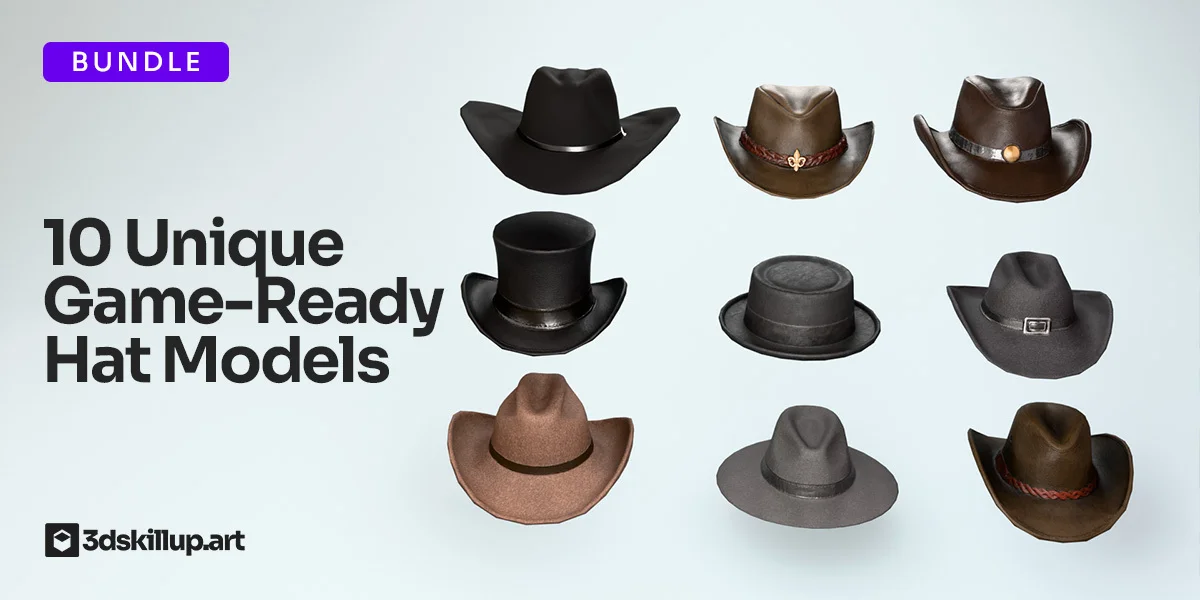
That is one reason dedicated accessory packs can be so useful in production. For example, a Cowboy Hats Pack with 10 unique game-ready models can help differentiate sheriffs, ranchers, outlaws, settlers, and background NPCs much faster than creating every headwear piece manually. Instead of rebuilding hats one by one, you can focus on styling, role assignment, and character storytelling inside your scene or game.
Used well, this kind of pack does not replace character design. It speeds it up while still giving you room for variation and customization.
Western Characters Should Feel Lived In
Believability comes from history.
A strong Western character should feel like they existed before the player met them. That feeling comes from all the small design choices working together:
- a hat that looks used in the right places
- boots that match the lifestyle
- leather that reflects time and weather
- accessories that support role and status
- silhouette that feels intentional
- clothing layers that make sense for the environment
When these elements align, the character stops looking like a costume and starts feeling like part of a world.
Final Thoughts
Building believable Western characters for games is not about adding as many genre clichés as possible. It is about clarity, consistency, and storytelling through design.
Start with silhouette. Define the role. Choose materials carefully. Let wear support the character’s lifestyle. Treat accessories as identity tools, not random decoration. And when building multiple characters, use modular variation intelligently to keep production efficient without sacrificing believability.
Western characters are memorable when they feel functional, readable, and rooted in the world around them. That is what turns a simple cowboy model into a convincing game character.
If you are developing Western characters and want a faster way to add visual variety, role distinction, and strong silhouettes, accessory sets like a game-ready Cowboy Hats Pack can be a practical addition to your workflow—especially for NPC populations, customization systems, and real-time projects in Unity, Unreal Engine, or Blender.