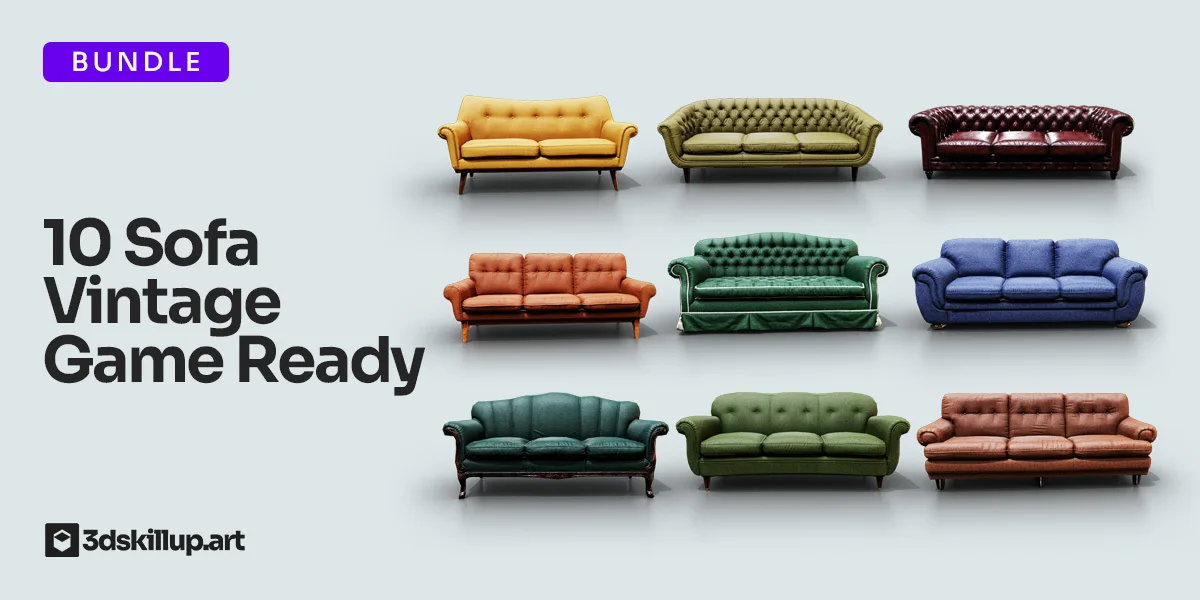
Vintage interior design is one of the most effective ways to add atmosphere, personality, and narrative depth to a game environment. A simple room can instantly feel more cinematic when it includes worn leather sofas, deep wooden furniture, soft lighting, patterned fabrics, brass accents, and carefully placed decorative objects.
For game artists and environment artists, vintage interiors are especially useful because they communicate history. They suggest that a space has been lived in, used, abandoned, restored, inherited, or carefully preserved. Whether you are building a luxury mansion, retro apartment, hotel lounge, detective office, Victorian living room, or cinematic storytelling scene, vintage design can make the environment feel richer and more memorable.
The challenge is balance. A vintage room should feel detailed and atmospheric, but not visually chaotic. It should have character, but still perform well in real-time engines such as Unity or Unreal Engine. In this guide, we will look at the key elements that make a 3D interior feel vintage, from color palettes and furniture silhouettes to lighting, materials, and storytelling details.
What Makes an Interior Feel Vintage?
A vintage interior is not created by simply placing old furniture inside a room. The mood comes from a combination of shape, material, color, lighting, scale, and small visual details.
Vintage interiors often feel warmer, more layered, and more decorative than modern minimalist spaces. They usually include curved silhouettes, textured surfaces, darker wood tones, patterned upholstery, aged leather, framed artwork, ornamental lamps, carpets, curtains, books, and objects that suggest personal history.
In game environments, this style is powerful because it immediately creates emotional context. A clean modern room may feel neutral, but a vintage lounge with a worn sofa, dim lighting, dark wooden panels, and slightly faded fabric tells the player something about the world.
It may suggest:
- wealth and tradition
- mystery and secrecy
- nostalgia and memory
- decay and abandonment
- elegance and power
- comfort and intimacy
- history and generational identity
This is why vintage interiors work so well in RPGs, narrative games, horror games, detective stories, mansion environments, luxury hotel scenes, and cinematic renders.
Start with a Strong Visual Direction
Before adding furniture or props, define the type of vintage atmosphere you want to create. “Vintage” can mean many different things, and each direction requires a slightly different approach.
For example, a luxury mansion interior may use tufted leather sofas, polished wooden furniture, gold accents, marble surfaces, framed paintings, and warm wall lights. A retro apartment may use fabric couches, muted colors, patterned rugs, plastic lamps, and mid-century shapes. A Victorian-inspired room may rely on dark wood, carved furniture, heavy curtains, ornate frames, and rich decorative details.
A good starting point is to choose three keywords for the room mood.
Examples:
Elegant, warm, aristocratic
Suitable for luxury lounges, villas, mansions, and hotel interiors.
Dusty, nostalgic, abandoned
Suitable for horror games, old apartments, forgotten homes, or mystery environments.
Cozy, retro, lived-in
Suitable for stylized games, casual interiors, domestic scenes, and narrative environments.
Dark, cinematic, mysterious
Suitable for detective offices, noir-inspired games, thriller scenes, and cinematic storytelling.
Once the mood is clear, every design choice becomes easier: furniture, materials, lighting, props, and color palette should support the same atmosphere.
Use Vintage Color Palettes to Build Mood
Color is one of the fastest ways to make a room feel vintage. Many vintage interiors use deeper, warmer, and more muted colors than contemporary spaces.
Instead of bright white walls and clean neutral surfaces, vintage rooms often rely on rich tones, natural materials, and slightly aged finishes.
Strong color combinations include:
Brown Leather, Dark Wood, and Warm Gold
This palette works beautifully for luxury lounges, private offices, old libraries, hotel lobbies, and mansion interiors. Brown leather sofas, walnut furniture, brass lamps, golden frames, and warm light create a sense of age, elegance, and comfort.
This direction is ideal for realistic games, cinematic renders, and environments that need to feel premium or aristocratic.
Deep Green, Burgundy, and Mahogany
Deep green and burgundy are classic vintage colors. They work well with dark wood, leather, velvet, and antique-style props. This palette can create a sophisticated, slightly mysterious atmosphere.
It is especially effective for RPG interiors, historical settings, occult rooms, old clubs, libraries, and narrative environments.
Beige Fabric, Faded Red, and Aged Wood
This softer palette is useful for retro apartments, family homes, and lived-in interiors. Fabric sofas, old rugs, faded wallpaper, and warm wooden furniture help create a nostalgic, human feeling.
This style is great when you want a room to feel personal rather than luxurious.
Black, Brown, Brass, and Low Warm Light
For darker cinematic interiors, use deep shadows, dark leather, brass details, and warm accent lights. This palette creates drama and tension, especially when combined with strong composition and directional lighting.
It can work well for detective offices, thriller scenes, horror environments, and moody cinematic shots.
Choose Furniture Silhouettes with Character
Furniture is the foundation of a vintage interior. Large pieces such as sofas, armchairs, tables, cabinets, and bookshelves define the personality of the room before small props are even added.
For game environments, sofas are especially important because they often act as visual anchors. They establish scale, create a focal point, and help the player understand the function of the room.
When choosing sofa and furniture models, pay close attention to silhouette.
Tufted Sofas
Tufted sofas are strongly associated with classic, luxury, and vintage interiors. Their buttoned upholstery adds visual rhythm and surface detail, making them useful for close-up renders and cinematic compositions.
They work well in:
- mansions
- hotel lounges
- private clubs
- offices
- luxury apartments
- Victorian-inspired interiors
A tufted leather couch can instantly communicate elegance, wealth, or old-world character.
Rolled-Arm Sofas
Rolled arms create a softer and more traditional look. These sofas feel classic, comfortable, and decorative. They are useful for living rooms, retro interiors, family homes, and period settings.
They can make a scene feel more inviting and less formal than a sharp modern couch.
Curved Legs and Wooden Details
Curved wooden legs, carved details, and visible wood elements help furniture feel older and more handcrafted. Even subtle details can make a model feel more vintage than a plain boxy shape.
In real-time environments, these details should be optimized carefully. You do not need extreme geometry density everywhere. Strong silhouette and good texture work can often do more than excessive mesh complexity.
Fabric Sofas and Patterned Upholstery
Fabric sofas are useful when you want a softer, warmer, or more nostalgic room. Rougher fabric, subtle patterns, seams, wrinkles, and faded colors can help the asset feel more believable.
Fabric furniture works especially well in retro apartments, old living rooms, cozy interiors, and stylized environments.
Use Materials to Add Age and Personality
PBR materials play a major role in vintage interior design. The same sofa model can feel new, old, luxurious, cheap, abandoned, or well-preserved depending on its material treatment.
A good vintage material should not look perfectly flat or plastic. It should have variation.
Useful material details include:
- leather cracks
- subtle roughness variation
- fabric weave
- edge wear
- darker seams
- slight discoloration
- worn corners
- faded areas
- ambient occlusion around cushions and buttons
However, it is important not to overload every asset with damage. A vintage room does not always need to look abandoned. Sometimes the goal is elegance, not decay.
A luxury vintage lounge may have polished wood, clean leather, and subtle wear. An abandoned mansion may need dust, scratches, stains, faded fabric, and broken details. A retro apartment may require softer aging: slightly worn cushions, muted colors, and natural material variation.
The best approach is to decide how old and how maintained the space should feel.
A Hungarian chevron parquet surface can establish a deliberate floor rhythm beneath vintage furniture. Judge board width and grain contrast beside the seating before deciding how much additional wear the room needs.
Avoid Overusing Worn Materials
One common mistake in vintage game environments is applying too much wear to every object. If every sofa, wall, floor, table, and prop is heavily scratched, dirty, and damaged, the scene can become noisy and unrealistic.
Real interiors usually have contrast. Some objects are more worn than others. Some surfaces are touched often, while others remain cleaner. Some furniture pieces may be old but well cared for.
To keep the scene believable, use wear strategically.
For example:
- Add more wear to armrests, cushion edges, handles, corners, and floor contact areas.
- Keep large flat surfaces more controlled.
- Use roughness variation instead of relying only on visible dirt.
- Combine clean vintage assets with a few aged focal details.
- Avoid making every material equally distressed.
This creates a more natural and readable scene.

Lighting and Storytelling
Lighting is what turns a set of furniture assets into an atmosphere. A vintage interior can look flat if the lighting is too neutral or too bright. To create mood, think about how light supports the story of the room.
Warm lighting is usually the best starting point for vintage interiors. Table lamps, wall sconces, fireplaces, chandeliers, and soft window light can create a strong sense of comfort and history.
Use Warm Practical Lights
Practical lights are visible light sources inside the scene, such as lamps, candles, chandeliers, or wall lights. They are useful because they make the lighting feel motivated and believable.
A vintage sofa placed near a warm lamp instantly creates a cozy focal point. A leather couch under a chandelier feels luxurious. A fabric sofa lit by a small table lamp can suggest intimacy and personal memory.
Create Strong Focal Points
In interior design for games, the player’s eye needs guidance. A room filled with furniture and props can become confusing without a clear focal point.
A sofa can work as the main anchor of the composition. You can support it with:
- a rug underneath
- a coffee table in front
- lamps on the sides
- wall art behind it
- curtains or windows nearby
- warm light focused around the seating area
This creates a readable visual zone inside the room.
Use Shadows to Add Depth
Vintage interiors benefit from soft shadows and contrast. Dark corners, occluded areas under furniture, and low warm light can make the room feel more cinematic.
In Unreal Engine, Unity HDRP, or Blender, experiment with indirect lighting, ambient occlusion, volumetric effects, and warm color temperatures. Even a simple room can feel much more atmospheric when shadows are carefully controlled.
Environmental Storytelling with Vintage Interiors
A strong game environment should not only look good. It should tell a story.
Vintage interiors are perfect for environmental storytelling because older furniture and materials naturally suggest the passage of time. A sofa is not just a sofa. It can imply who lived there, how they lived, what happened in the room, and what emotional tone the player should feel.
For example:
A polished leather sofa in a luxury office may suggest power, wealth, and authority.
A faded fabric couch in a small apartment may suggest nostalgia, family life, or economic decline.
A dusty tufted sofa in an abandoned mansion may suggest lost elegance and decay.
A red velvet couch in a dark lounge may suggest mystery, nightlife, or danger.
A worn brown sofa near a fireplace may suggest warmth, memory, and comfort.
When placing vintage furniture, ask yourself: what does this object say about the space?
Then support that story with props and layout.
Props That Support a Vintage Room
Furniture creates the main structure, but props complete the atmosphere. The goal is not to fill every empty space, but to add meaningful detail.
Useful vintage interior props include:
- framed paintings
- old books
- table lamps
- rugs
- curtains
- clocks
- vases
- wooden tables
- brass objects
- newspapers
- suitcases
- candles
- shelves
- mirrors
- decorative pillows
- old telephones
- fireplace tools
The key is consistency. A luxury lounge should not use the same props as an abandoned apartment. A mansion interior may need elegant decorations, while a retro living room may need everyday domestic objects.
Also consider the density of the scene. In a game environment, clutter should support navigation, performance, and readability.
Keep Real-Time Performance in Mind
Vintage interiors often include many detailed objects, which can quickly become heavy for real-time rendering. This is especially important in Unity, Unreal Engine, VR, AR, and interactive walkthroughs.
To keep performance under control, use optimized furniture assets and avoid unnecessary geometry density. Large furniture pieces should have enough detail to look good from normal gameplay distance, but they do not always need extremely high polycounts.
Good practices include:
- using low-poly or mid-poly furniture where appropriate
- relying on normal maps for small surface details
- using optimized PBR textures
- reducing unseen geometry
- keeping UVs clean and efficient
- using texture resolution based on camera distance
- using LODs for larger environments when needed
- combining visual detail with efficient topology
For portfolio renders or cinematic shots, you can afford more detail. For real-time gameplay, every asset should contribute visually without wasting performance.
Build the Room Around a Main Seating Area
One practical way to design a vintage interior is to start with the seating area. This gives the room an immediate purpose and helps you organize the composition.
A simple workflow:
- Place the main sofa as the focal point.
- Add a rug to define the seating zone.
- Add a coffee table or side tables.
- Add lamps to create warm light.
- Add wall decor behind or around the sofa.
- Add secondary props to support the story.
- Adjust color, contrast, and camera composition.
- Optimize materials and lighting for the target engine.
This approach works well for living rooms, hotel lounges, mansion interiors, offices, waiting areas, cinematic scenes, and archviz environments.
The sofa becomes the anchor, while the surrounding objects build atmosphere.
Vintage Interiors for Different Game Genres
Vintage interior design can work across many types of games, but the execution changes depending on the genre.
Horror Games
Use darker colors, old furniture, worn materials, dust, asymmetry, and uncomfortable lighting. A vintage sofa in an abandoned room can become unsettling if surrounded by silence, shadows, and decay.
RPGs
Use vintage furniture to define social class, history, and culture. A noble mansion, tavern lounge, old study, or royal waiting room can all benefit from classic seating and decorative furniture.
Detective and Mystery Games
Vintage interiors are excellent for offices, hotels, clubs, libraries, and private rooms. Leather sofas, wooden desks, warm lamps, and framed art can create a noir-inspired atmosphere.
Simulation and Archviz Projects
For real-time interiors, vintage furniture can help create premium and memorable spaces. Hotel lobbies, villas, lounges, and living rooms can feel more distinctive with classic sofas and warm materials.
Stylized Games
Vintage does not need to be realistic. You can exaggerate shapes, colors, and silhouettes while keeping the same design principles: curved forms, warm palettes, decorative details, and strong atmosphere.
Common Mistakes to Avoid
When creating vintage interiors for games, avoid these common issues:
Too Much Clutter
Vintage does not mean every surface needs to be full. Too many props can make the scene hard to read and expensive to render.
Random Asset Mixing
Do not combine unrelated furniture styles without a clear reason. A room feels stronger when the main shapes, colors, and materials belong to the same visual direction.
Flat Lighting
Even good assets can look weak under flat lighting. Use warm lights, shadows, and focal points to create depth.
Overdone Damage
Not every vintage asset needs to be dirty, broken, or heavily worn. Controlled material variation often looks more professional.
Ignoring Scale
Furniture must feel believable in relation to doors, windows, characters, and room size. Incorrect scale can immediately break immersion.
A consistent asset-scale workflow gives furniture and architectural pieces a shared reference before they enter the room.
Poor Optimization
High-detail furniture can look good, but real-time environments need performance-friendly assets. Use optimized geometry and texture resolutions appropriate for the project.
Final Tips for Creating Better Vintage Interiors
To create stronger vintage interiors for games, focus on atmosphere before decoration. A room should have a clear mood, a readable focal point, and a consistent visual language.
Use warm color palettes, expressive furniture silhouettes, believable PBR materials, and lighting that supports the story. Add props carefully, not randomly. Keep performance in mind, especially if the scene is intended for Unity, Unreal Engine, VR, or real-time walkthroughs.
A good vintage interior does not simply look old. It feels like it has a past.
Recommended Asset: Vintage Sofa Bundle 3D Models
A fast way to add vintage character, variety, and atmosphere to your interiors is to start with strong furniture assets.
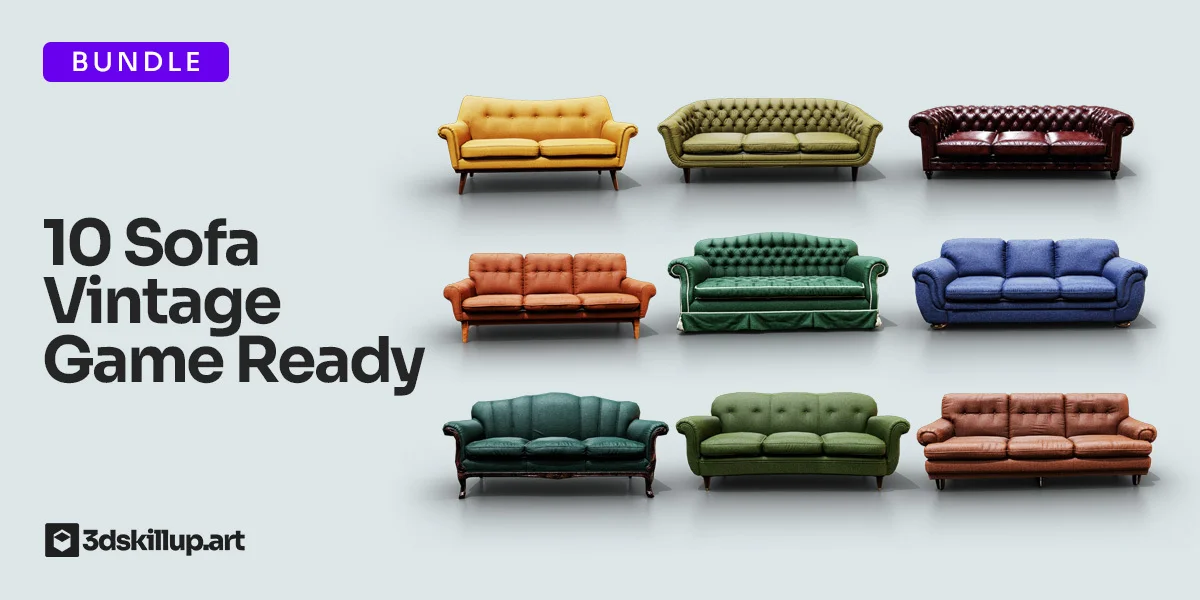
The Vintage Sofa Bundle 3D Models includes 10 game-ready vintage sofas designed for interior scenes, architectural visualization, real-time environments, cinematic renders, retro rooms, luxury lounges, hotel interiors, mansions, and stylized or realistic game projects.
The pack includes different sofa styles such as tufted leather couches, classic rolled-arm sofas, elegant fabric seating, retro lounge designs, and decorative vintage furniture. Each model is optimized for real-time use and includes PBR materials suitable for Unity, Unreal Engine, Blender, and modern metallic-roughness workflows.
Use it to quickly build:
- vintage living rooms
- mansion interiors
- hotel lobbies
- retro apartments
- luxury lounges
- cinematic storytelling scenes
- RPG interiors
- archviz environments
- VR and AR interior projects
Instead of modeling every sofa from scratch, the bundle gives you a ready-made selection of vintage seating assets that can help you test different moods, layouts, and design directions while keeping your workflow efficient and production-friendly.
To turn compatible assets into a focused room composition with useful spacing and restrained clutter, follow Small 3D Interior Scenes: Compose a Room with Fewer Assets.